

Streamlining Approvals. Safeguarding Resources.
At JMT, environmental permitting and regulatory compliance are foundational to delivering infrastructure that is both buildable and responsible. Our team of environmental scientists, ecologists, and regulatory specialists works across jurisdictions to help clients navigate complex permitting processes while protecting natural and cultural resources.
We support projects from planning through construction with services that include wetland and waterway delineations, terrestrial habitat and aquatic surveys, protected species assessments, forest stand delineations, and biological evaluations. Our staff includes Professional Wetland Scientists and other credentialed experts who ensure that field investigations and documentation meet the highest technical and regulatory standards.
JMT has extensive experience securing permits under Section 404 and 401 of the Clean Water Act, Section 7 of the Endangered Species Act, and other federal, state, and local programs. We also prepare environmental documentation to support permit applications, including NEPA compliance, stormwater pollution prevention plans (SWPPPs), erosion and sediment control plans, and mitigation strategies.
Our team has served as the environmental compliance lead on major design-build and alternative delivery projects, training thousands of personnel and coordinating directly with regulatory agencies. We understand how to balance project goals with environmental stewardship—delivering solutions that are defensible, efficient, and aligned with long-term sustainability.
Whether you’re planning a transportation corridor, utility expansion, or site development, JMT’s permitting and compliance team brings the expertise and responsiveness to move your project forward—on time and in full compliance.
Let’s clear the path to construction—responsibly.






Aquatic Surveys
JMT’s aquatic biologists have extensive experience conducting aquatic surveys for common and rare aquatic species throughout the eastern United States and Texas and hold state and federal permits to survey for freshwater mussels, fish, crayfish, and aquatic salamanders.
These services support environmental permitting and compliance for projects such as roadway improvements, bridge replacements, wastewater conveyance and utility crossings, FERC re-licensing, bank stabilizations, intake or discharge structures, and stream restoration initiatives for state agencies, municipalities, and private industry.
The southeastern United States supports the highest diversity of freshwater mussels in North America, yet many species have experienced severe population declines or extinction due to habitat loss, sedimentation, pollution, and altered stream flows. Because of this sensitivity, aquatic species are often an important consideration during environmental permitting for projects that may affect streams, rivers, and other aquatic resources.
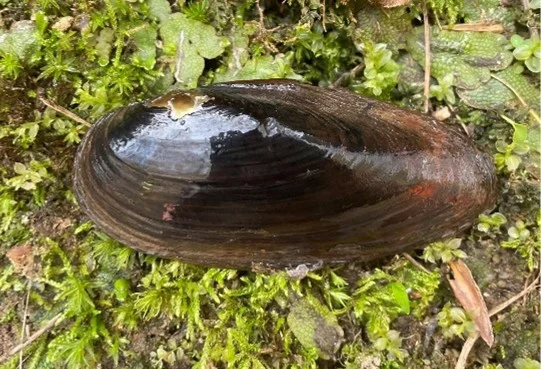
Freshwater Mussel Survey
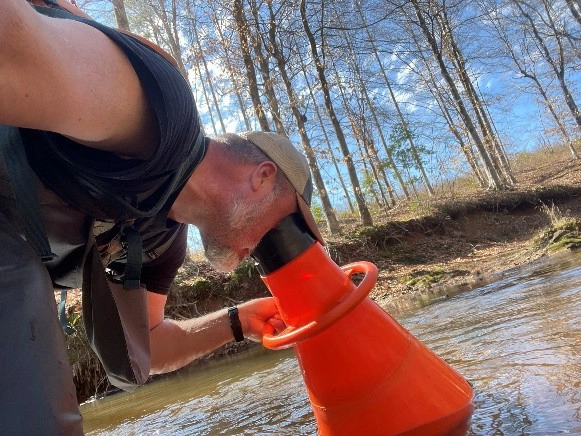
JMT staff are permitted and equipped to conduct freshwater mussel surveys and relocations throughout North Carolina, South Carolina, and Texas using methods such as wading, snorkel, and SCUBA surveys.
JMT’s Aquatic Surveys Lead, Chris Sheats, retains USFWS and NCWRC survey permits for the dwarf wedgemussel, yellow lance, Atlantic pigtoe, Tar spinymussel, James spinymussel, Carolina heelsplitter, Appalachian elktoe, littlewing pearlymussel, Carolina madtom, and Cape Fear shiner.
Steven Lopez, an Aquatic Biologist for JMT in Texas, retains a statewide TPWD permit for freshwater mussels and fish surveys. Steven has experience creating Aquatic Resource Relocation Plans (ARRP), Aquatic Introduction Permits (AIP), and Biological Assessments (BA) to comply with state regulatory needs. He has experience in every major river basin in Texas, including the Brazos River, Colorado River, Trinity River, Guadalupe River, and Rio Grande.
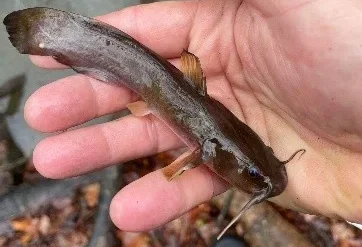
Freshwater Fish Survey
JMT staff are permitted and equipped to conduct freshwater fish community surveys throughout North Carolina, South Carolina, Florida, and Texas, using a variety of sampling methods appropriate for stream size, habitat conditions, and target species, including snorkel surveys, seining, gill netting, and backpack electrofishing.
These surveys are often conducted to document fish community composition, evaluate habitat quality, and determine the presence of rare, threatened, or endangered species, such as the Carolina madtom, Cape Fear shiner, fountain darter, sharpnose shiner, and smalleye shiner that may influence project permitting.
Neuse River Waterdog Surveys
The Neuse River waterdog is a protected aquatic salamander species endemic to the Tar and Neuse River basins of North Carolina. Unlike many salamanders, the Neuse River waterdog is fully aquatic throughout its entire life cycle, inhabiting streams and rivers with stable substrates and abundant cover.
Standard survey methodology involves deploying baited minnow traps in suitable habitats within and near the project footprint over multiple consecutive days during winter months when the species is more active. Data collected during these surveys help determine the species’ presence or absence and support regulatory coordination and project planning.
Benthic Macroinvertebrate Surveys
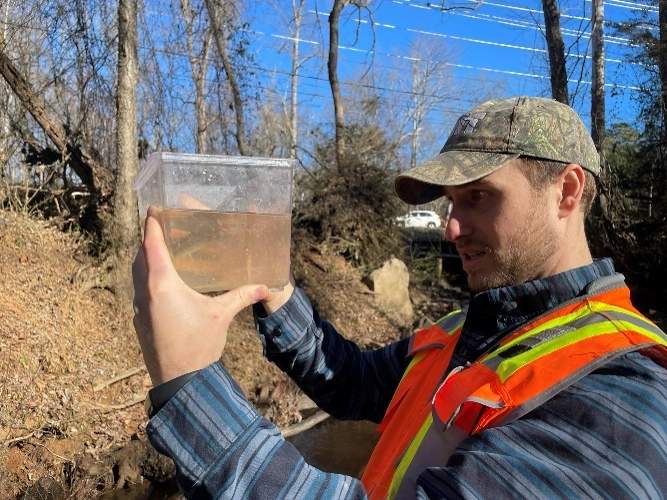
JMT has trained staff experienced in collecting and evaluating benthic macroinvertebrate samples throughout the eastern United States. Stream sampling is typically conducted using standardized methods such as kick-net sampling, with organisms identified and analyzed to evaluate community composition and ecological condition. JMT also conducts benthic infaunal sampling in rivers and estuaries by collecting sediment from the bottom of a waterbody to assess benthic habitat, diversity, and ecosystem health.
Benthic macroinvertebrate assessments and benthic infaunal surveys are commonly used to support water quality and quantity (i.e., flows and levels) monitoring efforts, assess stream restoration success, ensure regulatory compliance, inform environmental permitting, and watershed management and ecological assessments.
Zooplankton Surveys
JMT performs zooplankton sampling in spring-runs, rivers, and estuaries to support fish and invertebrate community assessments. These are used by resource managers at client agencies to monitor levels of eutrophication and evaluate hydraulic characteristics (flows and levels).
Submerged Aquatic Vegetation (SAV) Surveys
JMT’s capabilities to survey freshwater and estuarine systems extend to submerged and emergent vegetation. Past projects include work in springs and spring-runs, as well as streams and coastal habitats. Rapid habitat assessments in streams are routinely conducted and accompany faunal sampling/collections.